

4 Tips to Reduce Employee Stress at the Office
 Back to Top
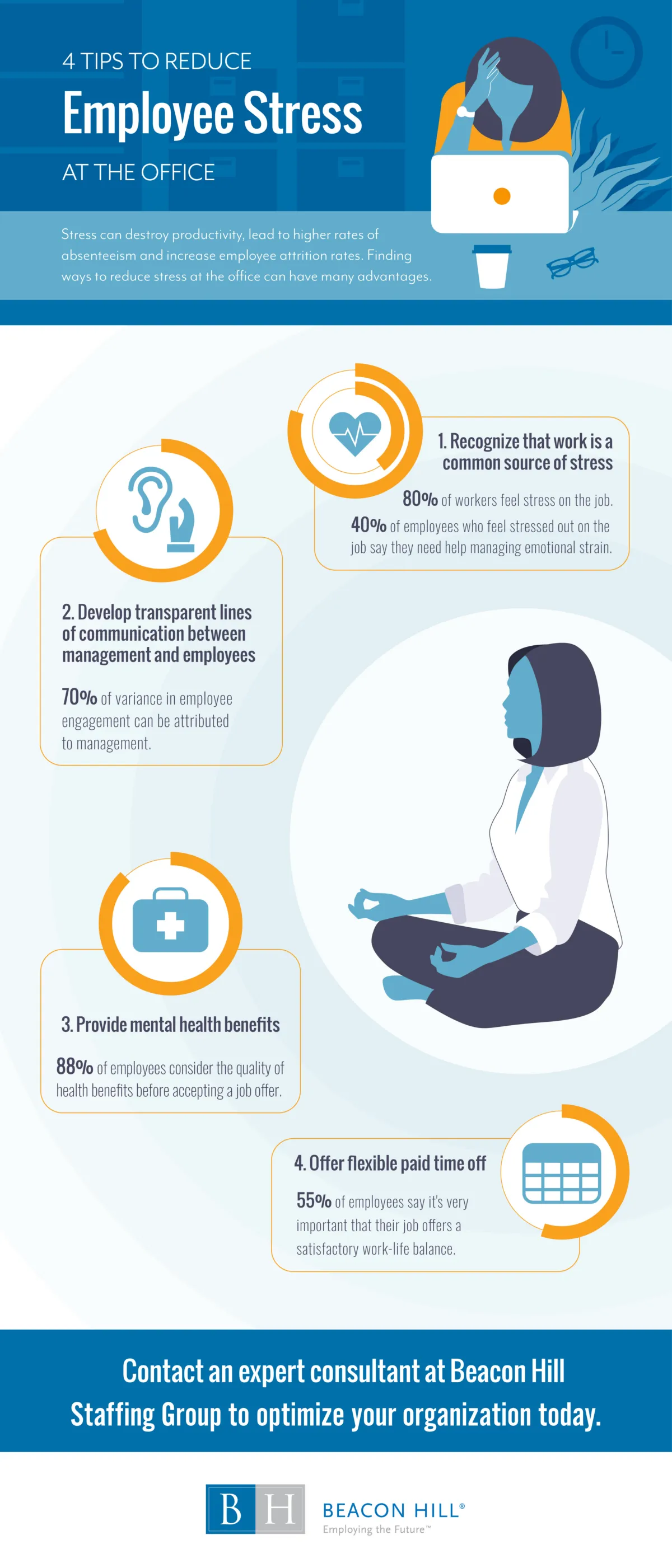
Stress is a part of life, but when it gets to be overwhelming, it can cause a number of problems. At work, stressed out employees perform worse and may be more likely to leave. There are many stressors present in the modern workplace, including relationships with management, burdensome workloads and uncertainty surrounding change.
Reducing stress at the office
Often, the most significant changes an organization can make to reduce employee stress revolve around policy. If managers have unrealistic expectations of their employees, it can put a lot of pressure on individuals. Having transparent conversations about daily expectations can give both sides a new perspective on the situation.
Beyond matters of policy, organizational leaders can support stressed-out employees by offering mental health and wellness benefits that empower employees to take care of themselves. For example, wellness programs can show employees how to improve their physical and mental self-care habits. Likewise, flexible schedules can allow workers to take some time off when they need to rest and recharge. Learn more from our infographic below:
Related Resources
-
![A group of professionals gathered around a laptop in a modern office, discussing workforce strategy and solutions.]()
4 Key Traits of a Great MSP Partner
Organizations increasingly rely on non-employees for flexibility and competitiveness, but managing this extended workforce is complex. Many HR, TA, and procurement leaders turn to Managed Service Providers (MSPs) for support—yet not all MSPs deliver equal value. This article highlights four traits that define top MSP partners: industry expertise, advanced technology, strong supplier management, and continuous improvement. Choosing the right MSP can transform workforce challenges into strategic advantages.
-
![]()
-
![Illustration of a job interview scenario with a candidate and recruiter discussing the hardest interview questions in a professional setting]()


